Showing posts with label Wait a Lonely Lifetime. Show all posts

Thursday, April 3, 2014

Don't Blame the Pilgrims - Repost


Since writing this article, I have had the opportunity to read more about the War Between the States.  I now caution anyone setting a work of fiction during this period to research both sides of this tragic conflict. 

This post was written a few days before it was scheduled to appear. The 4th blessing mentioned below made his appearance on the day this post was published. 

November 23, 2012 

Nearly every culture has a ritual for giving thanks for life and blessings. We celebrate thanksgiving in the Fall of the year particularly because of the abundant harvest the Summer months have provided. In the United States, this celebration has taken on a mantel of national enormity but where has this holiday come from?

One Blessing
In most religions, thanksgiving is a spiritual recognition of the blessings bestowed upon the faithful, again usually around the time of the harvest. In ancient times, people made sacrifices of living creatures and this practice is still in evidence today with turkeys, lambs, goats. In religious establishments, there are formal offerings, services of appreciation, shared meals to celebrate the bounty of the earth.
Two Blessings

But Thanksgiving is something else. Most of us in the United States have grown up with the legend of the Pilgrims and their wretched struggles in the first year of their life in North America. As the story goes, after over half their number starved to death, they were helped to survive through the kindness and generosity of the established inhabitants, whose own journey to this continent was taken thousands of years before.
And a fourth!


This story may be true in its essence but it isn’t the origin of Thanksgiving as we know and celebrate it today. (Let’s assume we’re not talking about the folks who’ve formed tent-communities outside mega-stores in lieu of having a meal with their families.) The Pilgrims were most probably celebrating the religious thanksgiving, toward the middle of October with a religious service and a long sermon, rather than the more pagan celebration of life and all the bacchanalia surrounding a day of feasting, football and family feuds.

Thanksgiving began its journey to becoming National Holiday only in the 1860s, during the American Civil War. The author, Sarah Josepha Hale, promoted the idea of a national day of thanksgiving to politicians for over forty years. At the time, a day of thanksgiving varied from state to state. A few months after the Battle of Gettysburg in July 1863, in part as an attempt to unify the northern and southern states, Lincoln declared a national day of thanksgiving for the last Thursday of November in that year.

For seventy five years, subsequent Presidents kept the tradition by declaring a national day from year to year but it wasn’t until December 26, 1941 that Franklin Delano Roosevelt signed into law that Thanksgiving became fixed on the fourth Thursday of November by federal legislation. For nearly 400 years, people living on this continent have celebrated their good fortune and the blessings bestowed upon them through the observance, religious and secular, of a day of feasting.

This is one of my favorite holidays and it seemed only natural to include it as a pivotal point in my Avalon Romance, Wait a Lonely Lifetime. I sincerely hope your day of thanksgiving was exactly that and may we continue to celebrate in the way that most fittingly shows our gratitude for our many blessings. 

Monday, March 31, 2014

What's So Great About Teachers? - Repost


September 23, 2012 

Students of all ages started back to school a little over three weeks ago, some as early as mid-August. Watching the kids riding the buses and streetcars, I remembered my own years of formal education – some more productive (and happier) than others. I’m also reading The Perks of Being a Wallflower – another nostalgic reminder of the people who inspired me to learn.

I think ‘teach’ is a misnomer. For most of what happens while we are in school, college and university – or actually what should happen – a better word is inspire. A teacher who inspires a love of learning does more than instruct. That teacher encourages an inquisitive mind, opening doors for the student that imparting of facts can never do.

I can remember so many teachers who captivated me with their love of their profession and their charges. Some were mysterious. Some were difficult. Some were cruel and some were saints.

I was never a particularly brilliant student. Competent in most subjects but with little commitment to the hard graft of getting good grades, particularly in Algebra. Girls were not supposed to be good at math or science. Equations evaded my grasp until my 7th grade math teacher, Miss Hughes, gave up her after school hours once a week to give four of us special tuition. When equations clicked for us, we had no idea then what her commitment to our understanding of a mathematical formula offered us and our futures.

If not for Miss Hughes, math would have continued to be my nemesis as it was for so many of my colleagues in community arts organizations. Miss Hughes’s few hours of tuition gave me a grounding in numbers that led to good jobs in the industry that most interested me as well as open opportunities in information technology that never occurred to me as a teenager.

A few years later, I sat in class and listened to Mr. Lombardi talk about language, particularly the English language. His love of language spoke to the heart of what I had always wanted to do, regardless of what job I might have to take. He also gave me the confidence to believe that a career in writing was a possibility for me, even if others urged me to be ‘practical’, be a teacher. 

While in university, I detoured into Art and Theater Studies. While studying Art, I found inspiration for my heroine in Wait a Lonely Lifetime (now in paperback). I also took courses in Astronomy and Physics. Eventually, I returned my love of language, first and foremost. The detours provided ample fuel for stories. They also extended my schooling by several years!  

During my post-graduate years, I had an opportunity to explore teaching as a career.  Although I had a few triumphs and amazing, special moments of being credited with changing someone’s life, I realized I had none of the commitment to the profession that I had experienced. I was and still am a student. 

A student can never be bored – there is always something new to discover. For this special gift, from those who are so gifted to inspire a love of learning, I am forever grateful. I would never have become a writer without you.

Sunday, March 23, 2014

Dreams & Aspirations - Repost

During my tenure as director and editor for Honno, I encouraged my mother to write her World War II memoirs. I presented my siblings and my sons with a privately published copy on her 90th birthday. These memoirs were subsequently published as an ebook, Following the Troops: Life for an Army Wife, 1941-1945.

July 23, 2012

I read Andrew Galasetti's guest blog at selfpublishingteam.com on Saturday morning (July 21, 2012) that resonated with me. Near the end of this post, Galasetti writes about his grandfather's writing dreams and how they had nearly died with him. This was particularly moving to me because I spent many years as an editor for a women's cooperative press in Wales, selecting material for three volumes of autobiographical writing by women that, had it not been for Honno, would not have been published or recorded for history.

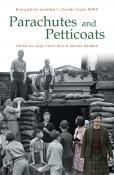
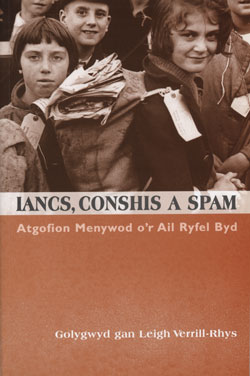
One of my proudest publishing moments was working on Parachutes and Petticoats and Iancs, Conshis a Spam, two volumes of women's writing about their experiences in World War II. Many of these accounts were harrowing, tragic or triumphant. All were about the indomitable human spirit and our willingness to sacrifice our lives for strangers.

The stimulus for both of these volumes was the stories my mother told me about her experiences during World War II and her childhood. Twenty years before her death, I asked her to write these stories down, intending to include them in one of the volumes. In the end, I edited and published them independently for my family and her grandchildren.

Several of my friends have created similar publications, so that their own personal journeys aren't lost and forgotten. During the latter part of the 20thC, there were hundreds of volumes of diaries and oral history projects undertaken to capture these stories for posterity. Until they were written, recorded or published, these experiences were stories passed on from one generation to another but often not. Now they are history, available to us all.

That is, as long as our smartphones, laptops, ereaders and tablets keep working. Galasetti's book, To Breathe Free, incorporates his grandfather's poetry and will be published in Fall 2012.

If you want a really good yarn, talk to your elders.


Wednesday, March 19, 2014

Among Friends - Repost

June 23, 2012

We here at Avalon Books have been in transition for a few months as my colleague, Kent Conwell, has mentioned in his blog this month. I’ve only been with Avalon for a little over a year but I’ve felt welcome and at home from the beginning.

My editor for Wait a Lonely Lifetime, Lia Brown, was the first person to read my novel and I will be forever in her debt for seeing the story as ‘a terrific romance’, and doing what editors do to get books they’ve enjoyed published.

Lia’s departure late last year was a blow, as losing editors has been for Kent. He has years of publishing experience to sustain him, as do all of the Avalon authors who’ve been with Avalon Books for a lot longer than I have.

I take this opportunity to say thank you to everyone here at the Avalon Authors Blog and the community established to help and support one another as writers, through transitions and uncertainties.

And to think, we’ve been called ‘jealous creatures’ (a line from the film, Midnight in Paris, attributed to Ernest Hemingway).

For a list of Avalon Books and all their authors, start at the publisher's website and go on to their full list of all Avalon authors. Find out what makes them all so special.

Monday, March 17, 2014

Meet Avalon Author Leigh Verrill-Rhys by Rebecca L. Boschee - Repost

I hope you don't mind that I'm including the interview that my colleague, Rebecca L. Boschee, did for the Avalon Authors Blog. I haven't changed a word! 

June 20, 2012

Today we're talking to Avalon author Leigh Verrill-Rhys about her novel Wait a Lonely Lifetime. Join us to learn what makes this novel special...

Wait a Lonely Lifetime (Avalon Books, 2012)

Sylviana Langdon's marriage went bad from the start. She married the wrong guy, and there was no chance of ever making him right -- not for her. Divorced and dating again, she can't stop thinking about a smart guy she met a few weeks before Steve came into her life. Eric Wasserman walked away from her with no explanation back then. What would he want with an airhead artist's model now, fifteen years and two little girls later?

Captain Wasserman's best buddy, Steve Langdon, saved his life and stole his girl. The career Army officer's second-in-command drops a pretty blue envelope on his desk. The handwriting isn't familiar, but the name pulls the pin on the grenade that has been in Eric's mind since he walked away from the green-eyed girl his buddy wanted.
When he doesn't reply to either of the two letters and a third arrives, his ungentlemanly behavior threatens the morale of his combat support unit. For the sake of his unit, Eric takes the hit from his best buddy's wife, wondering why Steve has put her up to writing to a man she doesn't know.

Welcome, Leigh! We've read the synopsis, but please take a minute to tell us in your own words what your latest novel is about.

Besides girl meets boy, girl falls in love with boy, girl loses boy, girl gets boy back? I began with that basic framework and built in betrayal, loyalty, self-sacrifice, hope and determination. Sylviana is a wide-eyed innocent looking for direction. When she meets Eric, he’s a bit roughed up by four years in combat zones but still has a strong commitment to doing right. Their natural connection is torn apart by Eric’s best friend, who is also attracted to Sylviana. Steve is smarter and meaner. When all his lies come to the surface, Sylviana ends her marriage to him and turns back in search of the man she believes she was meant to marry.

There's lots to like about that set up. I understand a big part of Wait a Lonely Lifetime is written in letters and emails. What inspired you to take that approach? 

Epistolary novels have a long, respectable history especially in the Romance genre. If you remember the film You’ve Got Mail based on the eastern European story The Letter (also made into a film in the 1930/40s with James Stewart) as well as a musical, He Said, She Said, you’ll recognize the device. I didn’t really plan the book that way; it seemed the only way Sylviana could communicate with Eric, not knowing how to reach him once he had re-enlisted. A letter is a monologue. Until it receives an answer, it’s just one person, one-sided. A letter demands and expects an answer. Once it’s written, the writer is at the mercy of the recipient. A lot like writing a book. Writing Wait a Lonely Lifetime in letter and emails seemed the natural way to bring Sylviana and Eric back together, much safer than a phone call. No matter how dependent we are on electronic communication, nothing replaces a handwritten letter to send a heartfelt message, most especially a love letter.

I couldn't agree with you more. There's something inherently romantic about letters. And speaking of romantic...your novel is set partly in Firenze. You’ve been there and have described it as one of the most enchanting places you have even visited. Was there anything in your book based on real life experiences? 

The moment I arrived in Firenze, I knew I was going to write about it but I didn’t make notes or keep a travel diary. I had a camera but took no pictures. I observed and absorbed. What I wrote about the city is distilled from all I remembered. Quite a lot! I made mental notes of some details like the high water mark and the monument to the victims of the Mafia bombing. I wove those into the story because they were unique. I kept the tourist map so I could find my way around once I was back in Wales.

It sounds like a great place to fall in love. Your heroine, Sylviana, falls in love with Eric at first sight. I’m a big believer in this, but how does she know?

I believe this happens for many people. The moment doesn’t always lead to everlasting love but I think we know when we’ve met someone we will never forget. That chemistry is instantaneous – ignore it at your peril! A lot of that sense is hopeful. Some of it is intuition and instinct. I’ve only felt that way about one person. I married him pronto.

Smart move! Let's talk about your writing. What was your favorite scene to write and why? 

I’m particularly fond of the plaid pajamas with piping around the collar scene. The most dramatic scenes are when Sylviana escapes with her daughters from her house and they can’t reach Eric on Thanksgiving Day. I also loved writing about Eva’s first school dance. The whole book was fun and challenging. I couldn’t stop writing. Part of the joy of writing for me is discovery. I don’t plot beyond a basic outline, feeling my way through the boxes and barriers that these persnickety characters put in the way.

Based on your discovery writing style, you must have learned something from writing your book. What was it? 

The most amazing thing I learned was that I could actually write a novel, from beginning to end. I learned the essential ingredient of discipline and more discipline. When Lia Brown asked to read the first chapters, I had half of the book still in draft. A month later, when she asked to see the full manuscript, I was ready! I had the feeling I had to be prepared. 

Good thing you followed that instinct! Was there any particular author or book that influenced you in any way either growing up or as an adult? 

The list of authors I’ve read and been influenced by is pretty long. I studied Victorian literature and was enamored of George Eliot. I’ve read every book she wrote and put Daniel Deronda as my #1 of all time. Also Middlemarch but that is lower on my list. I’m reading a lot of more contemporary writers at the moment: Frank Waters, Chinua Achebe, Gabriel Garcia Marquez. Isabel Allende’s short stories, Eva Luna and In the House of the Spirits are stunning. I’m a fan of Anne Tyler and enjoyed Annie Proulx’s The Shipping News. I just bought a copy of Sherry Thomas’s Not Quite A Husband after I heard her speak at the San Francisco Area RWA chapter meeting. I’m reading as many of the Avalon authors’ books as I can find. I guess you don’t want to hear about things like Milton Freidman’s books on economics!

You've just made me add about a half dozen books to my reading list (with the exception of the one on economics). What about more books from you? What are your current works in progress? 

My current work is another contemporary novel but I’d call it women’s fiction with strong romantic elements rather than Romance. Salsa Dancing with Pterodactyls is set in the financial district of San Francisco (hence the Milton Freidman!). This is another book I couldn’t stop writing but, like Michaelangelo, I am “finding the story in the words”, so to speak. 


I love the title—intriguing! What would you say has been the toughest criticism given to you as an author?

The toughest criticism is always a rejection. When I was just starting out, I kept all the polite notes from short story magazines. Nowadays they come in emails. I keep those too. There’s no honest criticism that you can’t learn from. I keep in mind it’s a lot easier to criticize than it is to create.

I'm sure many of us can relate to that. On the flip side, what has been the best compliment? 

The best compliments I’ve received are about Wait a Lonely Lifetime and my historical novel (written under my pen name) when people have told me they couldn’t put it down or that they were brought to tears, laughed out loud, are still thinking about the characters. When I read a book like that, it’s a lifelong treasure. 

And that's what makes it all worthwhile. In closing, do yo have any advice you'd like to give to aspiring writers? 

I considered myself an aspiring writer until I was mortified to hear myself say, “I always wanted to be a writer.” We’re only aspiring if we’re not writing. Once you write, you are a writer. My best advice is: Write the best book you can and then make it better.

Great advice. Thank you so much for your time today, Leigh and congratulations on your new Avalon release!

About the Author:

A native of Paris Hill, Maine, Leigh Verrill-Rhys spent most of her childhood and early adult years in San Francisco before emigrating to Wales to marry and raise three sons. She has been a writer, editor, and lecturer for most of her life, intermingled with career portfolios in marketing, finance, and community arts projects.
Wait a Lonely Lifetime is her first published novel. Leigh admits to running with scissors and leaping before she looks.

Follow Leigh at www.leighverrillrhys.com, her blog: www.everwrting.wordpress.com, onTwitter: @EverWriting9, or Facebook: http://www.facebook.com/LeighVerrillRhysAuthor

Saturday, March 15, 2014

Along for the Ride: Chapter 11 - Repost

Before you read this post, you may want to start at the beginning of the Avalon Authors Online collaborative novel, Along for the Ride.

June 18, 2012


Along for the Ride

Chapter Eleven

by Leigh Verrill-Rhys


After my initial burst of courage, I realized I was playing by their rules. Never trust a man who asks you to trust him, another pearl of wisdom my mother imparted before her death. Sure, he had green eyes and his lips were kissable. And yes, I did feel safe when he held me. True, he turned up when the danger was dire. However, and this was a big however, Stan was always around when danger struck, like a lightning rod. 

Here I was filthy, exhausted, humiliated and angry. Mel wasn’t going to come with any voodoo feelings to make me any less angry so I took the only action of any sensible nature, precisely calculated to get me out of there and give me time to think. I reached into my deepest self and brought up all the reasons to confirm Seattle and everyone I had met was my worst nightmare and convinced myself I was never going to see the sun again.

Miraculous result. I sobbed. I sobbed inconsolably, threw my arms over my face and ran from that padded room. I wasn’t insane but I soon would be if I didn’t get my act together, take control and find an escape route, pronto. I also wasn’t as complete an idiot as either Stan or Mel thought I was. However, adorable that man was under normal circumstances, I had suffered more than enough to understand that he was not good for me.

Hmmm, cinnamon. Okay, yes, I knew the whole score. That fact did not change my determination to take back my life and purpose. I did not want to be involved in their intrigues. I wanted the sun, the heat and the frivolous structure of my desert idyll. 

The next best thing was a sharp turn at the end of the hallway, a white panel door and a flip of the wall switch. A double, tiled walk-in shower cubicle with a sports power head. The secondhand clothes were a distant memory, piled like so much waste paper on the floor and I stood under the pulsing spray, at the maximum temperature I could tolerate, just to feel warm and clean again.

Not for long. I twisted my head under the spray, soaking up as much hot water as possible as though I could find clarity in the massage and all the time Stan was pounding on the door, demanding to know what I was doing and, “I have to talk to you, Sonya. Once you hear everything I have to day, you’ll understand why we had to do this.”

As if I didn’t understand. As if I would find it all very amusing and of course I didn’t mind being terrified out of my wits. After all, this was all in the name of integrity, security, justice, good business, or whatever other excuse they used to justify manipulating me into their mysterious, nefarious, criminal, need-to-know affair. 

Not me. I wasn’t their pigeon anymore. I could live without someone of Stan’s character in my life. I could definitely live without that interfering matchmaker, Auntie Mel. Just let me get out of Seattle. Take me back to Phoenix, Scottsdale, Mesa, Tempe , Chandler. Let me roam the high desert and cut cookies for the rest of my life. Please.

“Sonya? Sonya, darling, come out. We need to talk.”

I ignored the insistent tapping on the panelled door and the silky voice pleading with me to open it. Go away, Stan. The hot spray of water on my bare shoulders was the tonic I needed to get the aroma of cinnamon out of my head. Agent M4. Mel and her voodoo feelings and cinnamon-colored hair.

I tilted my face into the spray, scrubbed away the streaks of mascara and blusher and who knew what my foundation had done to enhance my questionable allure. There was no doubt in my mind that the whole horrendous adventure had been a hugely unfunny practical joke, at my expense. I met my reflection in the steamy mirror. Bedraggled. All for a supposed Seatlle tourist destination or some such thing. Reality TV. Oh, please! Did they really think I was that gullible? Did they really think I was so desperate I’d fall for an admittedly handsome hunk who made me feel safe all the time he was tormenting me?

I don’t think so, Mel. I was screaming in absolute silence. Irate, insane beyond even the semblance of reasonable. “All I want,” I hissed into the slit between the door and the warped doorframe, “is a flight on Southwest right back to Phoenix – absolutely anywhere but this soaking wet, drip of a place. Do you hear me, Stanley whoever-you-are?”

“I hear you.”

He sounded as flat as my hair, plastered to my aching skull. “Not funny anymore, is it?”

“Not when you put it like that, Sonya.”

“Right. So you get on that computer you’ve got stashed away somewhere in this phoney hideout or whatever it is and find me a flight home.”

“I don’t think I can do that.”

“Why not?”

“I’m not very technical. And I really don’t want you to go.”

“You should have thought about that before you and Mel and Anna and Agent M4 and your mother and Darla and those fricky and fracky cousins got all your twisted minds together to entertain me in Nightmareville, Seattle, Lesser Twin of the Amazon Rainforest.”

“You’re mad, aren’t you? You’re pretty mad, I guess.”

“You know what makes me really, really mad?”

“What’s that, Sonya?” His voice was small, like a child trying to wheedle his way out of being sent to his room. “Anything I can do?”

“What makes me really mad, Stan with the green eyes and warm-cookie-smell and latte foam on his lips, is that I fell for it, even for a little while.” He murmured something to someone – probably Anna or Fricky-Frack but, even with my ear stuck to the door, I couldn’t hear. “And while you’re discussing my future, Stan, find me something to wear. Something befitting my character and temperament. I don’t want to arrive in Phoenix looking any less sophisticated than when I left.”

“I’ll see what I can do.”

He was so accommodating, so gentle. How could I possibly continue being so mean to him? I looked straight into my face, stripped bare of any artifice. That’s why and how.

The tapping resumed after a lot more mumbling and Anna said something about the clothes I wanted. By now I was clued in to their tricks. All they got was a slim opening with my whole body braced against the door. The outfit was a bit wrinkled by the time it was shoved through the crack I allowed but not half bad for a phoney hideout somewhere in the Northwest. I had no illusions about what might happen when I emerged from the safety of the shower-room. At least, I no longer looked like the poor relation of a gorgeous travel agent.

Only Stan stood in the hallway. He’d found time to clean up, rest up and shave. His eyes were less haunted but still full of that you-know-you-can-trust-me concern. I glanced neither right nor left but grasped the inevitability of my inability to escape at that moment. I walked straight into his arms and did exactly as I had been dreaming of doing. I buried my face in his shoulder, inhaled with all my might.

“You’ll keep your promise, won’t you?”

“I will, Sonya. You can trust me.”

***

A dust-speckled ray of light struck at my eyelid. All across the room, shelves of sunshine forced their way through the Venetian blinds. I didn’t recognize the room, just the ever-present aroma of fresh-from- the-oven cinnamon cookies. When my head stopped spinning, I crept to the window and peeped out .

“Well, what do you know, Toto?  I’ve a funny feeling we’re not in Seattle anymore.”

Stan may have kept his promise, but there were very few rainbows in this part of the world.

***
TO BE CONTINUED


look for Chapter 12 on July 2

Friday, March 7, 2014

Title Search - Repost

This repost contains some music links to artists and songs that were inspirational to me for some personal as well as professional reasons.

February 23, 2012

Forget blurbs. Forget synopses. Forget even writing a novel or composing the jacket cover biography. The hardest job is finding a title. You've written a book to be proud of. You've put years of experience, months of work, weeks of revision, days of anticipation into the masterpiece. What keeps you awake night after night? The title. 

What comes to mind? Nothing as arresting, compelling, delightful, thrilling as the story. No. What do you do?

Sometimes I search the manuscript for phrases that catch the eye or the imagination. Funny thing. There never seems to be one that meets expectations. Does that mean...? Could that mean the book isn't as great as I thought? I don't entertain that thought for very long. That's just "Title Search Paranoia" whittling down writer confidence.

What's in a title, anyway? Just about everything, at least according to one of my college professors. Get that right and you've put a book in someone's hands. Get it wrong and you're overlooked for the catwalk creation sitting next to your wallflower. You need resonance. You need speaks to the heart/soul. What you get in the middle of the night is, well,... not much.

Sometimes, the best one comes to you as a flash of serendipity. Sometimes you agonize. Sometimes, you find a title before you know your characters' names or written a word.I carry a notebook in my bag. When a title presents itself, I make a note. Too often, the moment of inspiration passes without recognition. Just as often, the recorded title has no meaning when I next open that notebook.

Once in a while, I find myself locked into a title that is exactly perfect. Much more often, the novel is written, the characters ready for their moment to be read but the book is "untitled" or has the first name of one of the characters to distinguish it from all the other works in progress in my computer filing system.

In the case of my first novel for Avalon Books (to be released in April) the title came to me as I was walking to meet my lift to work. I was singing in my head and there it was. Wait a Lonely Lifetime has two significant events or connections to recommend it to me.

You may know it from the Beatles' song, "I Will":

Will I wait a lonely lifetime?
If you want me to, I will.

This was the song in my head and is actually a musical reference to a song that always breaks my heart when I hear it and one that both my husband and I shared as a favorite when we first met - playing on the jukebox in a bar in Noe Valley - we were on our second date. The music and lyrics are by Stephen Bishop and the song's title is "Looking for the Right One":

Will I wait another lifetime,
Keep on looking for the right one?

Art Garfunkel also recorded this song but I prefer Bishop's original. You decide:


This line, these four words, were and are perfect for the story I tell in Wait a Lonely Lifetime, of two people who find "the right one" but are kept apart for a lifetime by the calculated interference of someone they both thought of as a friend.

Monday, March 3, 2014

Self-Promotion & Me & All Those Who've Played Their Part - Repost


You may find this particular repost about self-promotion of value.

January 23, 2012

While watching Woody Allen’s Midnight in Paris, I noticed the frequency of the self-promotion opportunities taken by the artists and writers (portrayed according to Allen’s story) portrayed in this film. Each time s/he came into contact with the protagonist, the artist in the scene gave a full accounting of talent and creation.

During the NFL Championship game Sunday afternoon, the words of Mohammed Ali formed part of a promotional video clip: “I am going to show you how good I am.” We expect these ego centric outbursts from the greats in their fields. Ali was famous for his one line stingers: “I’m so mean, I make medicine sick.”

But, I wonder just how confident any performer, athlete or artist really is. We are happy to promote one another, our companies, our publishers, our friends and colleagues. When it comes to putting our own talents on the stage, some of us hesitate.

Courage to say to yourself you’re good is one thing. Courage to shout it out loud is something else. More and more, writers are expected to fling their solitary work-mode into the bottom drawer and step onto the stage, limelight and greasepaint all aglow.

Before my career as a professional writer took hold, I had no qualms about promoting my marketing company to potential clients, with no sense of reserve or embarrassment. With my first published novel a mere three months from release, I am at a loss as to what I should and need to do.

Perhaps I am in a state of shock or a creative coma. My training in marketing is of no help. I know I must promote the book, myself, the story, attract readers, build suspense, start the buzz, ignite the fire. All my marketing instincts have gone on vacation, perhaps because I have no physical evidence of my Avalon novel.

I have a JPEG image of the book cover. I have a digital file of the copy-editor’s work. I have the final computer file of my revisions, but I have no book to hold in my hands. I can only imagine, by comparison to other Avalon novels I’ve read, how good my own book will be.

When a painter or sculptor or musician presents their efforts, they stand alone. The canvas or the marble or the sound are completely, utterly their own. For a writer, about to be published, the extent of the team involved becomes clear. In many ways, this makes promoting the book much easier.

Along the way, many hands add to the final product and before I tell you how much you will enjoy the story of Sylviana’s bold search of a love she lost, I want to hold the book and read again what my Avalon editor, Lia Brown, called a “terrific romance”, revel in the splendor of Matthew Simmons’s gorgeous book cover design, wonder at the stroke of fortune the I won a contract from the publisher in the first place, delight in the efforts of my copy-editor, marvel at the typesetter’s skill in composing space and line and letters on the page and be awed by the printer’s magical transformation.

Wednesday, February 19, 2014

Interview with Ilsa Mayr: The Widow - Repost

This interview appeared shortly after the publication of Ilsa Mayr's novel, The Widow, a book about one woman's experience of illegal immigration. 

November 23, 2011

Good morning, Ilsa. Thank you for agreeing to this interview. I’d like to start with the inspiration for The Widow. You have chosen a controversial idea for your relationship. How did that occur to you?
The inspiration for THE WIDOW came from a most prosaic incident. I was sitting in my dentist's reception room, waiting to have my teeth cleaned. I picked up a magazine that featured a long article on illegal border crossings in Texas. From that evolved the plot of the novel. I can't remember the name of the magazine, but the article was obviously impressive.

Did you have any second thoughts or misgivings about a marriage of convenience for these two characters?
I am a sucker for the marriage of convenience plot. Since we know that a happy ending is guaranteed in a romance, one of the thornier problems is to come up with a conflict strong enough to keep the hero and heroine apart for some fifty to seventy thousand words. In a marriage of convenience plot, tension and conflict are naturally built in.

Saturday, February 15, 2014

Sense of Place - Repost

The following article appeared on Avalon Authors while I revised Salsa Dancing with Pterodactyls.

October 23, 2011

A few years ago, one of the first comments I received on a manuscript I submitted to an agent was “I don’t know where this takes place.” I thought the descriptions were pretty clear. As far as I was concerned there is only one ‘City’ — San Francisco. The agent thought I was writing about London but she didn’t recognize my evocation.

Both cities are renown for fog and I had plenty of fog but mine was rolling over Twin Peaks. Hers was rolling up the Thames. I had trolley cars and BART. London has the Underground and double-decker buses. She wasn’t seeing any of the landmarks of her City.

I didn’t want to go down the route of actually naming the location – somehow that seemed a bit of a cheat, especially for this particular book. I wanted the physical and sensual details to do the job but they didn’t, at least not for this particular reader who had her own ideas about wharves, wet tram lines and exhaust fumes.
So, how do you evoke a sense of place? If you name the town or street, how do you ensure the person who reads those words has a real sense of where you want them to imagine themselves to be? Is a sense of location that important?

Tuesday, February 11, 2014

What Does a Writer Need? - Repost

This article was posted a few months before I moved from Wales, where I'd continued my writing and became a founding member and director of a women's co-operative publishing company, Honno.


September 23, 2011

I’m in the process of clearing 30 years of accumulated essentials. Besides all the accumulation related to family and friends, I have acquired books, paper, pens, inkjet cartridges, pencils, notebooks, files and their cabinets, envelopes to send manuscripts, envelopes for the return of manuscripts, floppy disks, external hard drives, thumb drives, cameras and their batteries, photographs on paper and on disks, computer and laptop, printers and scanners, desks, office chairs, briefcases and laptop bags as well as boxes and boxes of manuscripts. All of the above is related to my writing.


With just seven days remaining before I have to condense my life and work into two suitcases and a carry-on bag, what do I really need to keep working for the next three months while I wait for all of the above to arrive at my next hometown? 

My Essential Notebooks
I already know that I have a writing desk waiting for me, as well as a bookcase that will hold approximately 1/4th of the books I am shipping. So, in order of priority, these are my essentials:
  1. Current work with any associated notebooks all scanned to the laptop (see below).
  2. Laptop with all typescripts and scanned material (see above) saved in at least three different places (including cloud storage) in case of loss.
  3. My three favorite writing implements with all the ink cartridges I have in stock.
There is one other most critical something else, but I’m a bit short of that right now.

What are your essential ingredients for your work? Do you have any suggestions that will help me keep working while all around me goes astray? What should I leave behind?

All ideas grateful received.

Monday, February 3, 2014

How to Handle A Romance Writer - Repost


Three weeks after the Romance Writers of America national conference in New York, I wrote this article for Avalon Authors, July 23, 2011

The romance genre in commercial, popular fiction has been attracting considerable criticism in recent months. Most of that has been directed at the more risqué end of the romance spectrum but the bad press filters through to all the many and varied categories. The book, Such Stuff as Dreams, sheds some light on how we benefit from fiction of all descriptions – well worth a look for the pundits who rage at romance.
 
Last month, at a writers association’s national conference, I had the opportunity to attend a workshop on Media Handling. This month, I had an opportunity to use what I had learned. The principle issue discussed in the workshop was how to handle adverse interviews.
This did make me wonder if crime writers, fantasy and science fiction authors, mystery and western storytellers ever have to fend off the attacks that romance authors are currently having to defend themselves against. Maybe some of you can answer that for me.

Friday, January 31, 2014

Bright Lights, Big City: Big Thanks - Repost

On June 23, 2011, I published this article as a tribute to two people who were instrumental in my determination to become a writer.
 
I will soon be on my way to the publishing Big Apple, New York City, USA. Though this will not be my first visit, this will be my first opportunity to experience this city from the point of view of a novelist (soon-to-be published). Always before, I have been a 'wannabe' writer and my experiences of writers conferences, publishers and book launches have been small scale in comparison.
 
Many of you will have heard of The Hay Festival held at the end of May in the village of Hay, in Wales, close to the English border. For many writers to the east of the Atlantic Ocean, The Hay Festival is the Big Apple of literary festivals. Several years ago, I had the extraordinary opportunity to attend The Hay as a fledging writer with a grant from the Arts Council of Wales. My mentor at the time was Tony Bianchi, whose faith in me as a writer I have only now begun to fully appreciate.
 
The one person I can categorically name as the instigator of my ambition to be a writer was my high school English teacher, Mr. Lombardi. He gave me an 'A' on an essay about John Steinbeck's The Red Pony. The essay began: Gitano was dead. That is all I can remember of this momentous event. I had never achieved an 'A' before and his comments – now lost in the miasma of scores of teachers' and lecturers' and professors' contributions and contradictions – fuelled my passion for writing.
 
Even so, my experience of the Hay Festival that year had ambivalent results. Although I absorbed all I could of the gentle words Leslie Norris offered in his master-class, to be in the presence of so many professional writers, publishers, booksellers, readers and agents was daunting – silencing. Even more daunting was reading the piece I had written during the master-class week in front of Tony and a handful of festival visitors.
 
Every experience generates its kernel of self-knowledge. Some of the younger writers were brimming with self-confidence. I wasn't one of them. Neither was I one of the sage practitioners of wordcraft. My publishing record consisted of a few short stories. I had ambitions for longer pieces but that was not to happen for a number of years and even then, I wasn't ready to put my hand in the mangle. If not for being stranded in Hay with just £10 to last the week and not wanting to disappoint my mentor, I considered walking the 55 miles home.
 
For Tony Bianchi and Mr. Lombardi, I have created several characters who, if they don’t directly reflect these two men in any real sense, they are tributes to the generosity of spirit each exhibited toward writers and students.
 
This is a tough journey without the open-hearted help of others who’ve gone before us and hold the doors open. Who are some of the writers, teachers, mentors who opened doors for you?

Saturday, January 25, 2014

Concept to Contract - Repost

Below is my first article on Avalon Authors on May 23, 2011. Avalon is no more and some of us are forming a new group blog at Classic & Cosy. I hope you will join us there. These are my blogs for the original Avalon Authors group blog. Over the next few months, any article title with 'Repost' in it will have come from the Avalon Authors blog. 


Good day. My name is Leigh Verrill-Rhys and I am a new author with Avalon Books. My first published novel is Wait a Lonely Lifetime, a contemporary romance set in Firenze (Florence) and San Francisco. Although this book has had a rocket speed journey from conception to contract, the journey for me as an author has been a lifetime.

What can you say about an event that amounts to the biggest moment in a writer’s career? Selling your debut novel. Every description falls short – despite your finely honed skill at the craft you have made your life’s work.

I have put words on paper from the day I learned how to hold a pen and make letters. I remember the evening I sat at the drop-leaf table in my parent’s living room, scribbling my story of giants and fairies, when I decided to make writing my profession.


Between then and now, there have been a few hundred diversions and denials. All manner of writing has sustained me – from grant proposals to articles to autobiographical anthology editing. Besides short stories, I steered clear of fiction. I told myself, ‘If I truly wanted to write fiction, I would be writing novels.’ But I was writing novels, in my head and in notebooks, a secret indulgence!

The day came when I had to make the final declaration. Though I have always written, I hadn’t given myself permission to be a writer. For years, I struggled with where my writing always took me. One day, I confessed. ‘I write romance.’ I lost a few friends or rather they deserted me but I had finally staked my claim on my future. The journey so far has led me to many new friends and opened a vast world of potential.

Three years later, almost to the day, I sent my contemporary romance to Avalon Books. Though not my first completed novel, I’m proud that Wait a Lonely Lifetime is my debut as a novelist.

Last month, I participated in a group blog as a guest at Four Foxes One Hound. The subject was ‘ideas’ and I wrote about some of the events and images that contributed to this romantic novel. The title sums up not only the relationship in the book but also the length of time to experience enough to be ready for that moment of clear, sparkling inspiration.

My moment came one morning in early autumn as I sat at a table in Venice. Across the room, I saw a man in uniform. From that moment, Wait a Lonely Lifetime took shape and flourished through to the end. In this book, I had to explore a world and a way of life that were alien to me. At the same time, I felt I was ‘coming home’.

Have you had a similar journey? Where has your writing taken you?